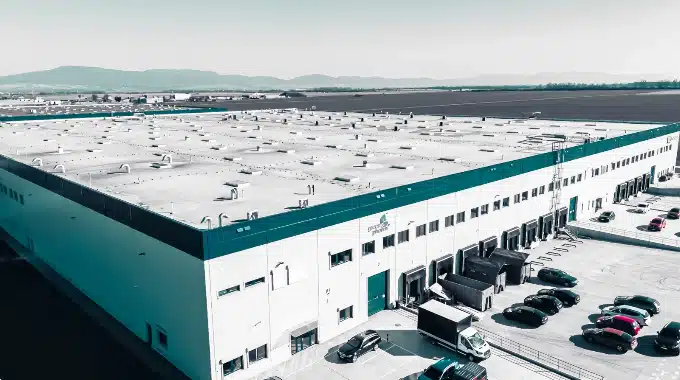
Plaček Pet Product

How Pet Product validated the benefits of modern planning in a complex retail environment

Pilot project focused on demand planning, designed to validate time savings, data handling and planning scalability in a fast-growing retail organization.

18-month forecast

1 data environment

Czech Republic

Retail & distribution

2900+ employees

Voice of the customer

Kristýna Havránková

Demand Planning

Use cases

Validation of time savings in the planning process

Demand planning at product (SKU) level

Technologies used

Qlik Sense

Inphinity Forms

Problem

Pet Product’s original planning process relied on manually collecting data from several systems and reports. Forecasts were prepared up to 12 months ahead, and the process was time-consuming, difficult to repeat and not very flexible. The company’s rapid growth, including the opening of 25 new stores per year, called for a more flexible and data-driven approach.

Solution

We designed a pilot demand planning solution that unified data and enabled forecasting directly within the planning environment. The project validated time savings, an extended planning horizon and the solution’s scalability in a fast-growing retail environment.

Before

Manual work with spreadsheets and partial reports
Separate data views across teams
Highly time-consuming planning process
Forecast limited to 12 months

After

Data unified in a single analytics environment
Better visibility into data across countries and categories
Validated potential for time savings in planning
Forecast extended up to 18 months

What we delivered

Demand planning at SKU level
Forecasting with a horizon of up to 18 months
Automating rules for planning and forecasting
Better visibility into data across countries and categories
Unifying data from multiple sources into one environment
Validating time savings and the scalability of the planning process
The pilot project successfully validated both the technical and data functionality of the solution. However, a subsequent change in the organizational structure and management of logistics processes led to a reassessment of priorities and the decision not to continue further development of the solution.

Planning used to mean collecting data from several sources and constantly comparing them. In the pilot solution, we validated that unifying data and automating rules can significantly simplify the entire process.

Kristýna Havránková

Demand Planning

More case studies

Let’s talk about your data.

Whether you are working on planning, reporting, or AI, we will recommend the next step that makes sense in the context of your business.